
Learning to Read the Snow: Avalanche Education on Mount Washington
Thanks to the Backcountry Squatters Scholarship for Outdoor Education, I had the opportunity to take an AIARE 1 Avalanche Training Course on Mount Washington, New Hampshire. Over three days, we learned how to assess avalanche risk, analyze snowpack stability, and travel safely in winter backcountry environments. The experience gave me not only technical skills but also knowledge that I hope to bring back to the Squatters community.
My interest in outdoor leadership began before college, when I became a Registered Maine Sea Kayak Guide and spent a summer guiding trips in Frenchman’s Bay in Acadia National Park. I had just turned eighteen when I passed my Maine Guide exam, and while the process was intimidating at first, I quickly found confidence in leading trips and teaching others how to safely navigate the ocean environment.
One of the most empowering parts of that experience was the people around me. The majority of the guides I worked with were women; strong, knowledgeable, and incredibly supportive of each other. That environment showed me how powerful it can be when people uplift one another while learning outdoor skills, and it shaped the kind of outdoor leader I hope to be.
When I came to the University of Maine, I was excited to find that same spirit within the Backcountry Squatters. I joined during my freshman year and quickly realized it was the kind of community I wanted to be deeply involved in. Since then, I’ve spent the past two years helping plan and lead trips, served as the club’s Secretary last year, and then the Vice President. One of my favorite parts of Squatters has been organizing trips where people get to try new outdoor activities and build confidence in the process. This past fall, I helped plan two instructor-led rock climbing trips in partnership with the MaineBound Adventure Center. Many participants were climbing outdoors for the first time, and by the end of the day, they were not only having fun but also talking about future climbing goals and trips they wanted to take. Watching people discover a new passion and realize they are capable of more than they expected is incredibly rewarding.
Taking the AIARE 1 course felt like the next step in building the skills needed to lead winter trips safely.
The first day of the course took place in the classroom, where we focused on the fundamentals of snow science. We learned how snowpacks develop over the course of the winter, how different types of snow layers form, and how weak layers within the snowpack can create instability. We also talked about weather patterns, route planning, and how to manage a group while traveling in avalanche terrain. Another key part of the day was learning how to use avalanche rescue equipment, beacons, probes, and shovels, and practicing the process of locating and digging out a buried person. While Mount Washington has the Mount Washington Avalanche Center providing daily avalanche forecasts, we also discussed how to evaluate conditions in areas without avalanche reports. That skill is essential for anyone who hopes to travel responsibly in the backcountry.
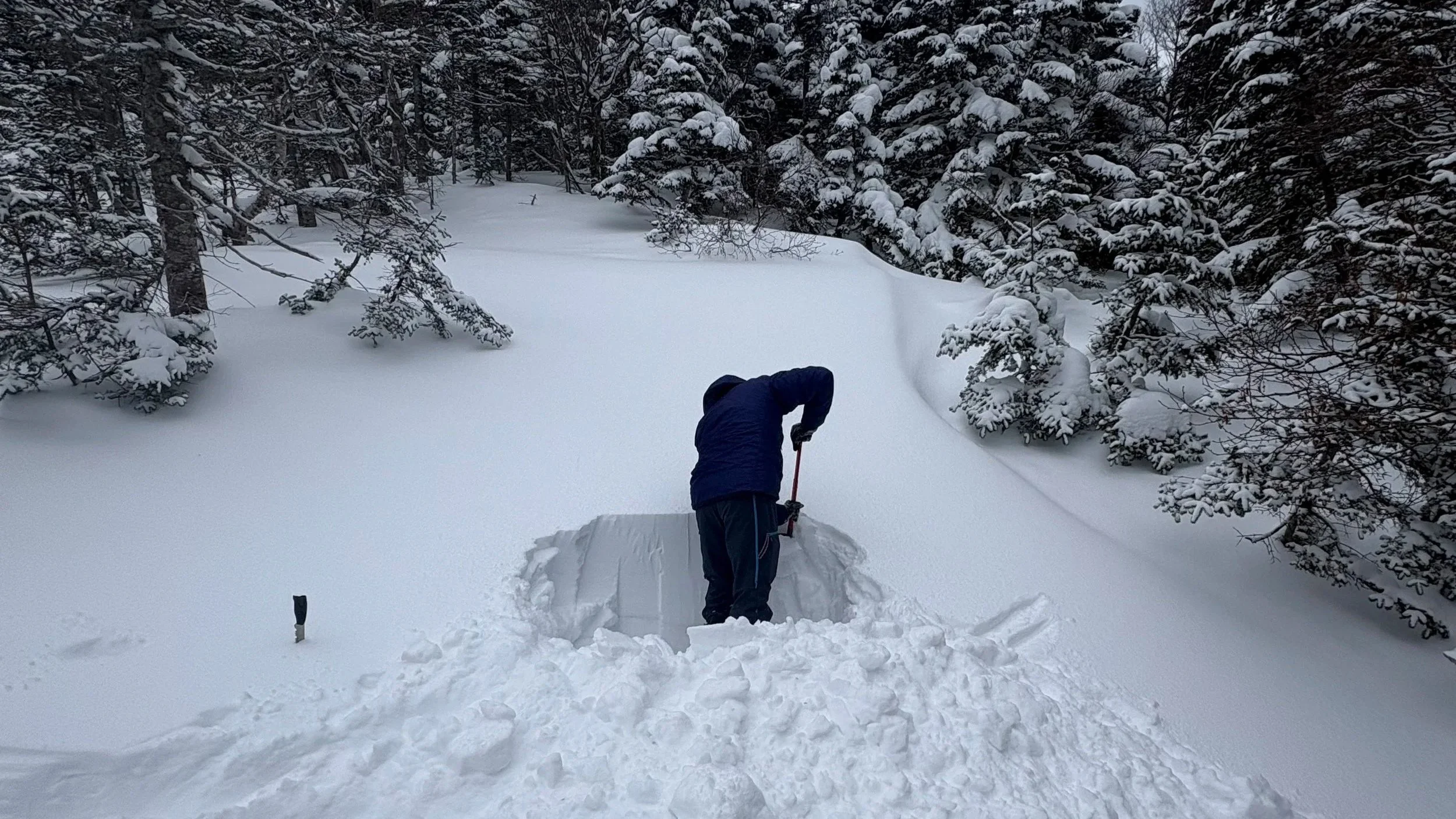
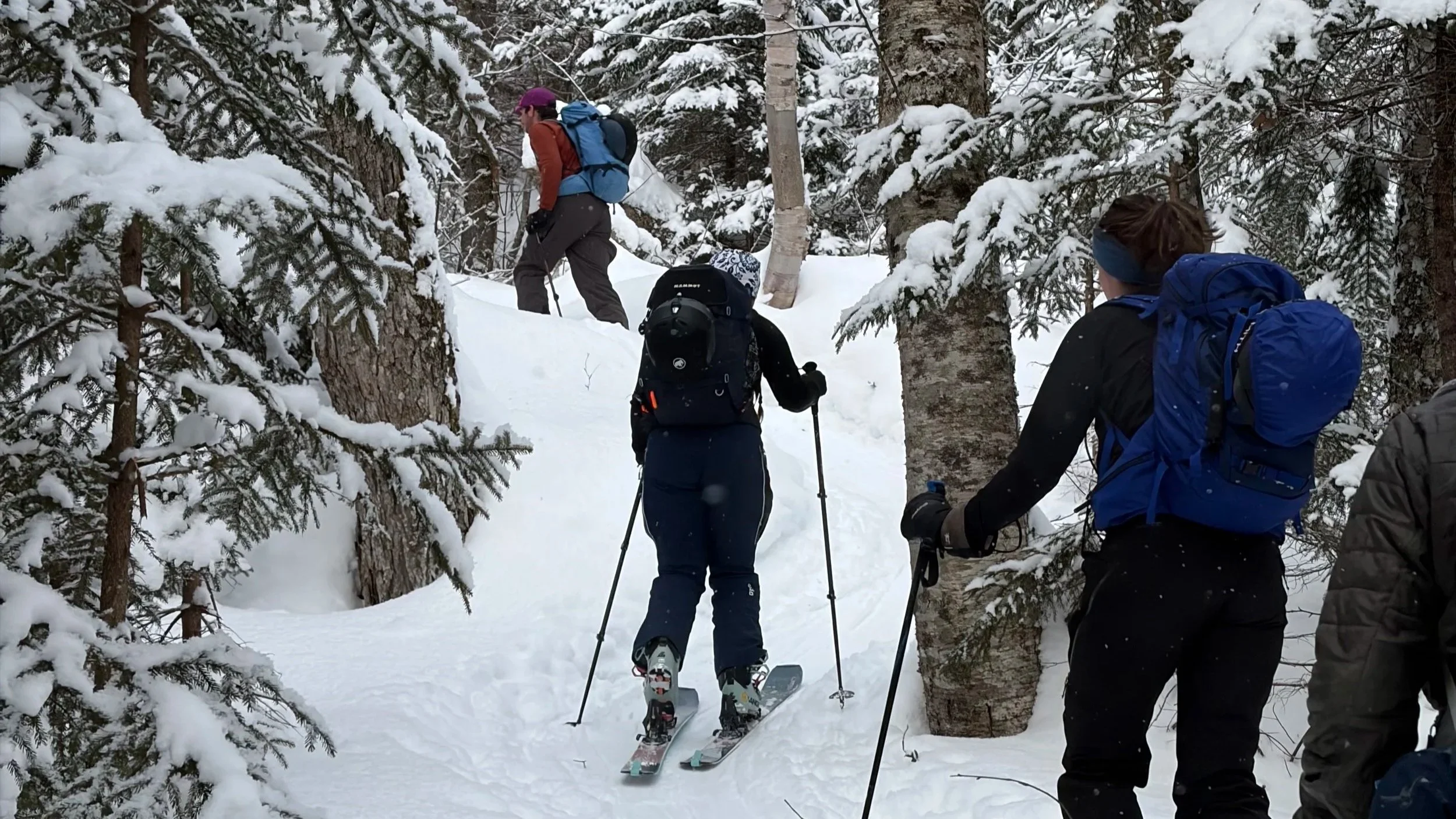
On the second day, we moved outdoors and began putting our knowledge into practice. We started by running avalanche-rescue scenarios, searching for a buried pack using our beacons before probing and digging it out as quickly as possible. These exercises reinforced how important efficiency and teamwork are in an emergency. Afterward, we skinned up the Sherburne Ski Trail, stopping frequently along the way to examine terrain features and discuss avalanche risk. Higher on the mountain, we dug several snow pits to analyze the snowpack. During one of these pits, we performed a shovel tap test to see how easily layers within the snowpack would separate. About a foot below the surface, we discovered a faceted weak layer, and with only a few taps of the shovel, the slab above it slid cleanly off. Seeing that instability firsthand was both fascinating and humbling. It was a reminder of how dynamic and complex snow conditions can be.
By the third day, we were ready for a full ski tour into the Gulf of Slides. Our goal was to ski Main Gully, but first we needed to evaluate the conditions and determine whether it was safe. We started the day by planning several possible routes depending on what we found in the snowpack as we gained elevation. As we climbed into the Gulf, we carefully chose our route to minimize exposure to avalanche terrain. Once in the snowfields beside the gullies, we dug another snow pit and performed stability tests. Based on what we observed, we determined that the snowpack in that location was relatively stable and felt confident traversing toward Main Gully.
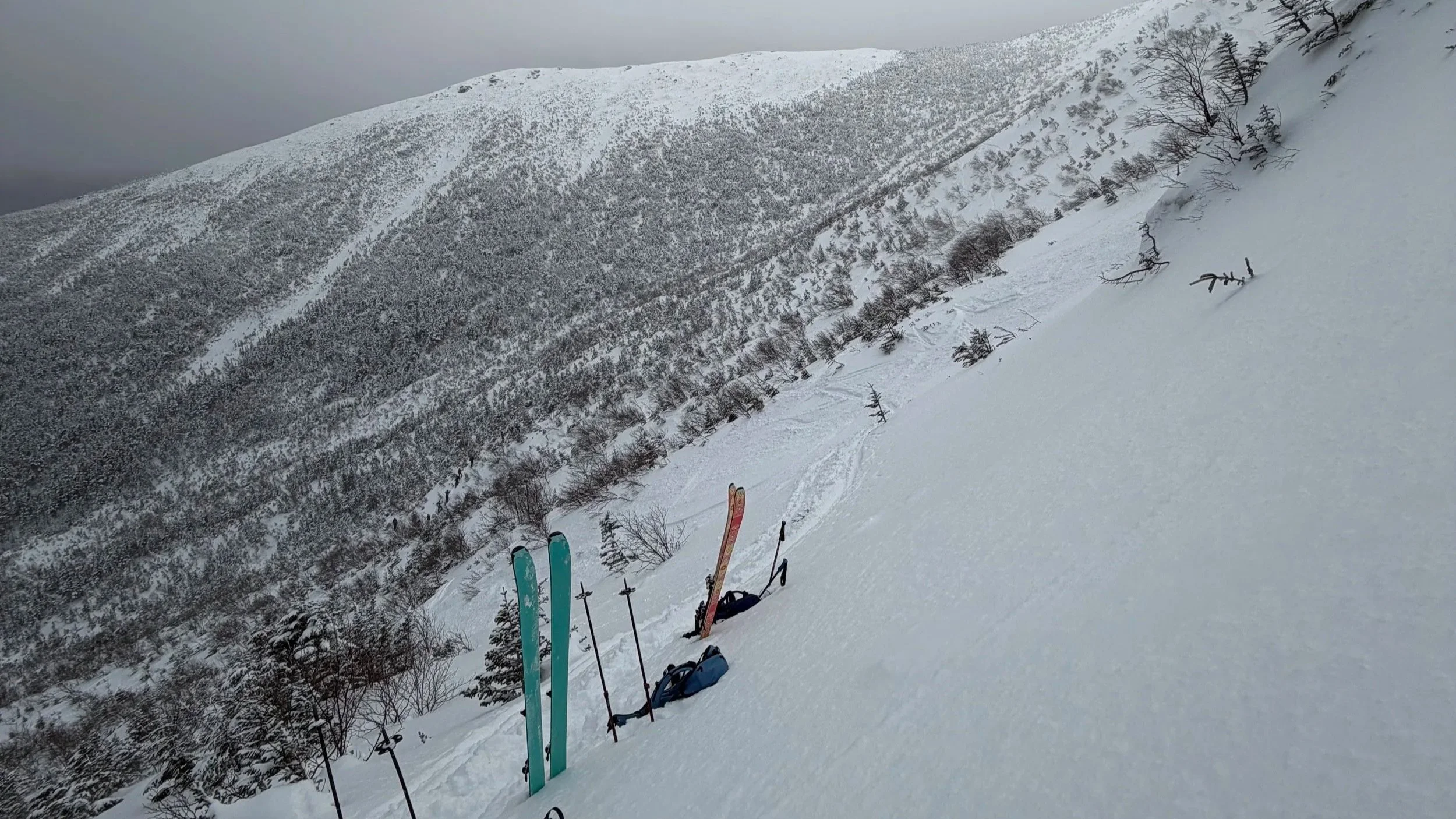
The ski down was incredible, soft snow, big mountain views, and the kind of run that makes the long climb completely worth it. But what made it truly special was knowing that every decision along the way had been made thoughtfully and collaboratively.
One of the main reasons I wanted to take this course was to help bring more people, especially women, into backcountry skiing. In the Northeast, getting into the backcountry can feel intimidating. The equipment is expensive, the terrain can be complex, and avalanche knowledge can seem like a huge barrier to entry.
My hope is to use what I learned during this course to help make backcountry skiing more accessible within the Squatters community. Next winter, I would love to organize introductory backcountry ski trips in the Western Maine Mountains or the White Mountains of New Hampshire. Ideally, we will be able to partner with local ski shops so participants can rent touring setups if they do not yet have their own gear.
Like our climbing trips, my goal would be to make these outings as accessible as possible so that anyone who is curious about backcountry skiing can try it in a supportive environment. Outdoor communities grow stronger when people share knowledge and support each other while learning. The mentorship I have received, from sea kayaking guides in Acadia to climbing partners at UMaine, has shaped my experience in the outdoors, and I hope to pass that same support forward. I am incredibly grateful to the Backcountry Squatters for supporting my participation in this course. Because of this scholarship, I gained skills that will help me travel more safely in the mountains and share that knowledge with others.
The mountains will always have risks, but with the right education and a strong community, we can learn how to navigate them together. I’m excited to bring what I learned back to the UMaine Squatters and help more people experience the joy of moving through snowy mountains safely and confidently.
Carly
Fall 2026 Backcountry Squatters Scholarship for Outdoor Education Recipient
